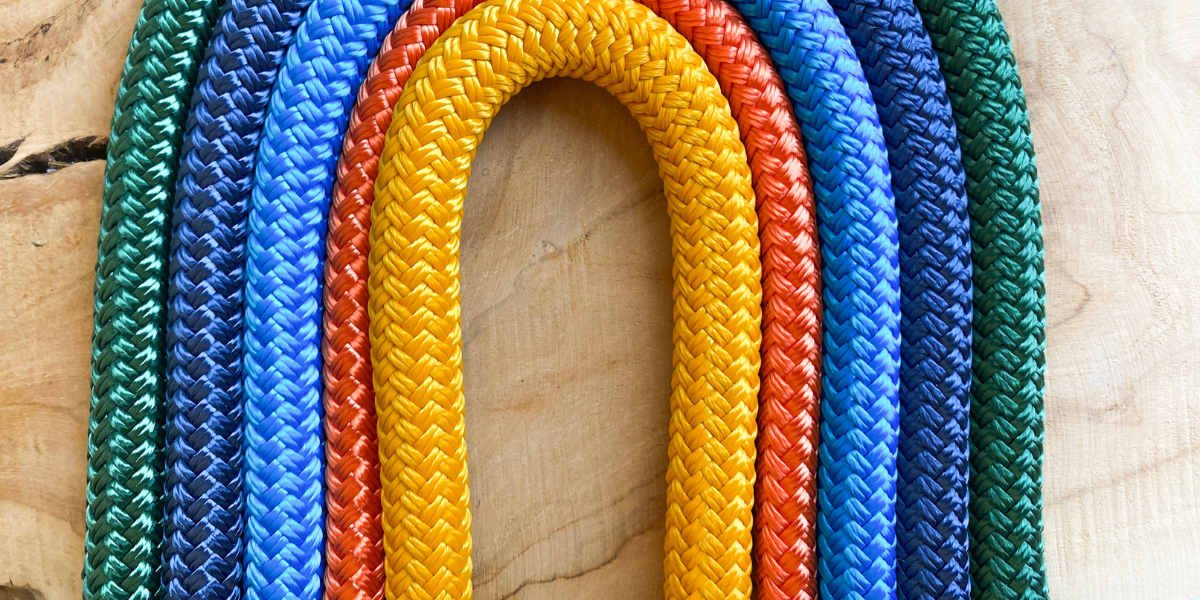
Our 4 ranges of halyards and sheets
Most of our products are based on a braided construction with core and cover. The inner core absorbs the loads, while the outer polyester cover protects against abrasion, friction, salt, and UV exposure.
- Syracuse: Polyester cover + Dyneema® core • Very lightweight, no stretch, high strength • Ideal for spinnaker and gennaker sheets
- Malo: Polyester cover + parallel polyester core • Sheets for dinghy and cruising: jibs, mainsails, spinnaker guys, and traveller control lines
- Perros: Polyester cover + braided polyester core • Sheets, halyards, downhaul (vang) and topping lift
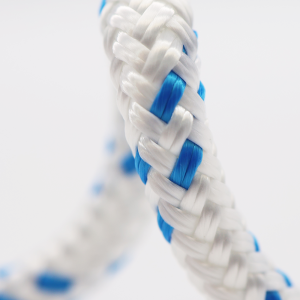
- Naxos: Polyester cover + braided polyester core • Very high abrasion resistance • Versatile
Recommended lengths:
- Halyard: 3 × mast height
- Sheet: Jib: 1.5 × boat length • Mainsail: 2.5 × boat length • Spinnaker: 2 × boat length
Halyard, sheet - Syracuse
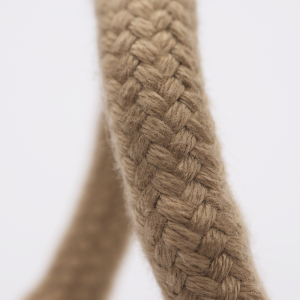
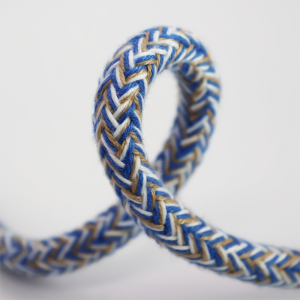
"Cotton feel" Sheet - Malo
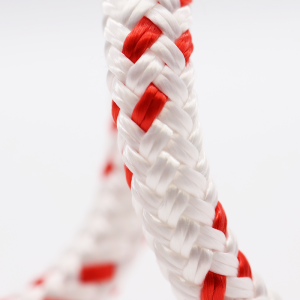
Halyard, sheet - Perros
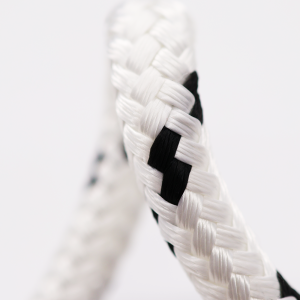
Sheet - Naxos
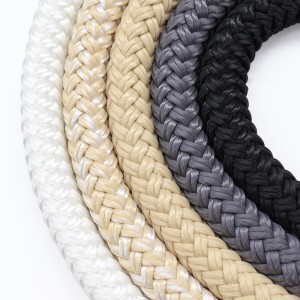
Our multi-purpose braided ropes
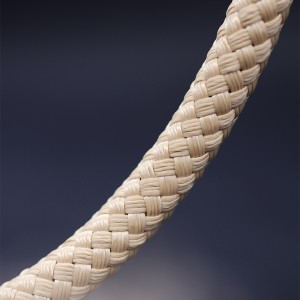
Complete your project

Catamaran net

Marine hardware

Mooring line

Lashing line
You may like
Corde torsadée, drisse, tresse, ganse : quelle signification ?
Ces termes désignent la spécificité du tressage et de la construction de la corde.
Corde naturelle, corde synthétique : quelles différences ?
À chaque corde ses spécificités et ses avantages.
We answer you
Historically, "halyard" is the maritime name for a braided rope generally used to hoist a barge, horn or sail.
A pre-stretched cord has undergone a factory pre-stretch process to greatly limit its elongation during use.
Thermofixing is a pre-stretch performed at 100°C to improve compaction and stabilization of the fibers. This process improves the mechanical properties and life of a rope. It is reserved for high-end ropes for demanding uses.
A halyard is used to hoist a sail to the top of the mast, while a sheet is used to adjust its angle relative to the wind.
It is the sheet that allows you to control the boom and trim the sail to gain or reduce speed.
Dyneema® is the benchmark technical fiber for halyards and sheets. Both very lightweight and extremely strong, it stands out for its near-zero stretch, ensuring precise and consistent trimming over time.
Long reserved for high-performance sailing, it is now widely used on demanding cruising boats. Its higher cost is justified by its performance and durability.
More accessible, polyester is the most commonly used material on cruising boats, valued for its versatility. It performs well under constant load and offers good resistance to UV and seawater. However, it does have some stretch, making it a good compromise between strength, durability, and flexibility.
Polyamide (nylon), a stiffer and more elastic material, is generally reserved for mooring and anchoring lines